


Wound Hygiene FAQ: your questions answered
 ;
Wound Hygiene is a topic that comes up often in clinical conversations, and the questions are usually practical ones. This blog collects those questions in one place, for your to read at your leisure.
Why a Wound Hygiene FAQ?
If you've listened to our Wound Hygiene Bitesize podcast series, you'll have heard that global wound care is in crisis. With that in mind, we wanted to answer some frequently asked questions and how implementing Wound Hygiene could help to reduce your caseload.
Our Wound Hygiene blog also highlights the key takeaways from the series and you can hear from real clinicians who have implented Wound Hygiene into their teams and what advice they have.
If you have not heard our Wound Hygiene podcast series, you can listen on all major podcast networks. You can also watch the videos on YouTube.
What is the Wound Hygiene protocol?
Wound Hygiene¹ is an anti-biofilm protocol of care designed to give every wound the best chance to heal. It's intended to be used as a proactive strategy, applied consistently to wounds, rather than as a response once a wound has deteriorated.
The protocol comprises of four steps:
Cleanse
Removing any surface contaminants and loose debris or slough from the wound surface or surrounding skin.²⁻³
Debride
Debridement is the removal of viable and non-viable wound components, including necrotic tissue such as eschar and other foreign materials.⁴ This is particularly important for hard-to-heal wounds.
It's a major component of wound management, and it's all about preparing the wound bed for re-epithelialization towards the healing process.
Refashion
Listen to Jo Wilkins, Clinical Strategy Manager at Convatec discuss what we should be focusing on when refashioning a wound, with her cliffs and beaches analogy helping to make the importance of the wound edges much clearer!
Dress
Apply your anti-biofilm dressing and/or antimicrobial agents and reassess every two weeks and keep going while risk for infection or biofilm is still a barrier to healing.
Learn more about how our anti-biofilm dressing, Aquacel Ag+ Extra performed in an RCT.
Does the dressing choice matter at the end of the protocol?
Using a suitable anti-biofilm dressing, such as Aquacel Ag+ Extra is a proven final step to progress wound healing.²⁻³ ⁵ The two-week rule for silver dressings is a checkpoint, not a cut-off. NICE’s Late-Stage Assessment assumed up to 12 weeks of use in infected leg ulcers.⁶
In practice, "suitable" means matched to the wound, the exudate level and the patient's circumstances. Your local formulary and the product instructions for use are the right place to confirm that choice.
Can Wound Hygiene be applied consistently across a team?
Consistency is a recurring theme in community and district nursing, where care is delivered by many people across many visits. Variation in wound care is not simply a clinical issue; it has system-wide implications.⁷ Learn more about standardising your patients care.
During our Wound Hygiene Bitesize series, we caught up with a range of HCPs to get their thoughts on how they found implementing the four-step protocol.⁸
"Go for it! I cant say anything bad about it. It's showcased amazing results in Birmingham. Patients have healed after having wounds for a long time. The results speak for themselves."
Anita Charters, Tissue Viability Nurse, Birmingham
"It is standard practice now. We've embedded the pathway into our wound assessment template within the patient record and allocated a slot to cover the four steps within our mandatory training"
Jay Hughes, Tissue Viability Nurse, The Wirral
How do I get started with Wound Hygiene?
If you would like to start implementing Wound Hygiene in your everyday practice but you're unsure where to start, why not consider taking part in the Wound Hygiene Challenge?
Our dedicated team of Clinical Strategy Managers will support you and your team as you work through your own interactive checklist and help you to review and report back on successes.
1. Murphy C, Atkin L, Swanson T, Tachi M, Tan YK, Vega de Ceniga M, Weir D, Wolcott R. International consensus document. Defying hard-to-heal wounds with an early antibiofilm intervention strategy: Wound Hygiene. J Wound Care 2020; 29(Suppl 3b):S1–28
2. Torkington-Stokes R, Moran K, Martinez DS, Granara DC, Metcalf DG. Improving outcomes for patients with hard-to-heal wounds following adoption of the Wound Hygiene Protocol: real-world evidence. Journal of Wound Care. 2024;33(5):304-10.
3. Murphy C, Atkin L, Vega de Ceniga M, Weir D, Swanson T. International consensus document. Embedding Wound Hygiene into a proactive wound healing strategy. J Wound Care 2022; 31:S1–S24.
4.Tettelbach, W. H., Ciprandi, G., Downie, F., et al. (2024). JWC International Consensus Document: Best Practice for Wound Debridement. Journal of Wound Care, 33(6 SupC), S2–S32.
5. Metcalf, D.G., Parsons, D. and Bowler, P.G. (2017), Clinical safety and effectiveness evaluation of a new antimicrobial wound dressing designed to manage exudate, infection and biofilm. Int Wound J, 14: 203-213. https://doi.org/10.1111/iwj.12590
6. Holmes H, di Ruffano L, Kelly L, et al. [GID-HTE10041] - Topical Antimicrobial Dressings for Infected Leg Ulcers in People and 16 and over. External Assessment Group Report.; 2025.
7. Stephen-Haynes, J. and Toner, L.C.M. (2025) ‘Wound care in the UK: addressing variations in practice, cost, outcomes, and the data deficit’, British Journal of Nursing, 34(20), pp. S4–S10. doi: 10.12968/bjon.2025.0428.
8. Hawkins, S., “Wound Hygiene Bite-Size Podcast Series,” Podcast, Convatec, 2025.
AP-82495-GBL-ENG-v1
Blogs
05/09/2024

Wound healing in hard-to-heal cases
Despite advances in dressing technology and best practice, wound care is in crisis. Successful treatment requires an ...
Read more Read more28/08/2024

How to recognise wound biofilm
Spotting biofilm with the naked eye can be a challenge due to its microscopic structure. Knowing how to recognise wou...
Read more Read more27/08/2024

Why is biofilm so resistant?
Read our latest blog to learn what makes biofilm a tricky customer and how the right wound dressing can destroy it.
Read more Read more22/08/2025
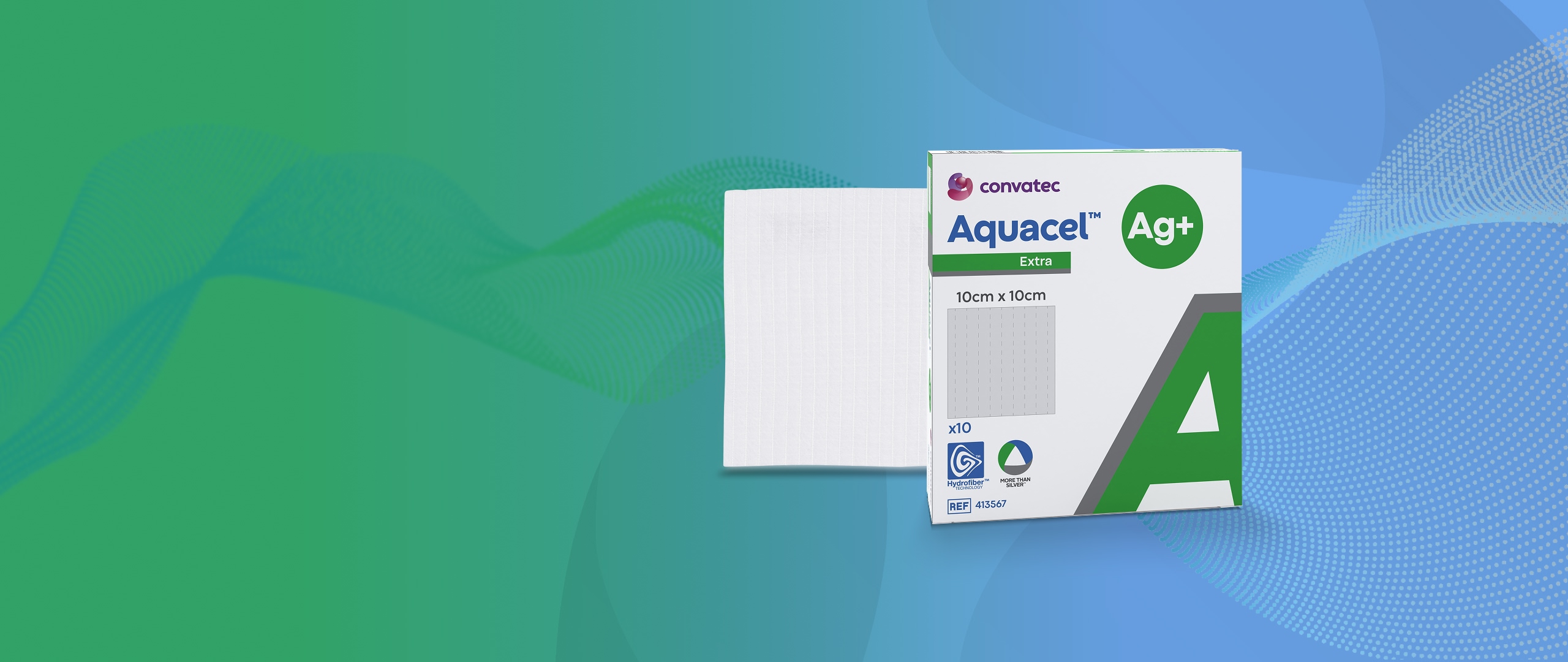
What the Latest NICE Guidance Means for Antimicrobial Wound Dressings
The latest evaluation from NICE provides important clarity on the use of topical antimicrobial dressings such as Aqua...
Read more Read more21/10/2025

Lessons from the Wound Hygiene Podcast Series
The Wound Hygiene Bitesize Podcast series explores the four-step protocol of care, designed to simplify and standardi...
Read more Read more17/03/2026

Wound healing: Don't underestimate nutrition
In hard-to-heal wounds, HCPs must look beyond the wound at other factors including comorbidities, socioeconomic chall...
Read more Read more
10/12/2025

Recognising Pressure Ulcers in Darker Skin Tones
Identifying pressure ulcers is key to preventing harm. For patients with darker skin, the signs of pressure damage ca...
Read more Read more08/04/2026

Improving Postoperative Surgical Wound Dressing Outcomes
The Jubilee Method arose after clinicians saw many blisters from traditional adhesive dressings. This led the team to...
Read more Read more20/05/2026

Reducing cardiac surgical site infection: The role of post-op dressing choice
For patients undergoing cardiac operations or surgical procedures, the journey does not end in the operating theatre....
Read more Read more22/05/2026
It Doesn’t Have to Be This Way: Legs Matter Awareness Week
This year’s Legs Matter Week runs from 8–12 June, bringing together patients, healthcare professionals, and system le...
Read more Read more17/06/2026

Standardising dressings: From variation to value in wound care
At a time when the NHS is under increasing pressure to deliver more efficient, evidence-based care, reducing variatio...
Read more Read more